
Cooking for engineers - Soda bread recipe
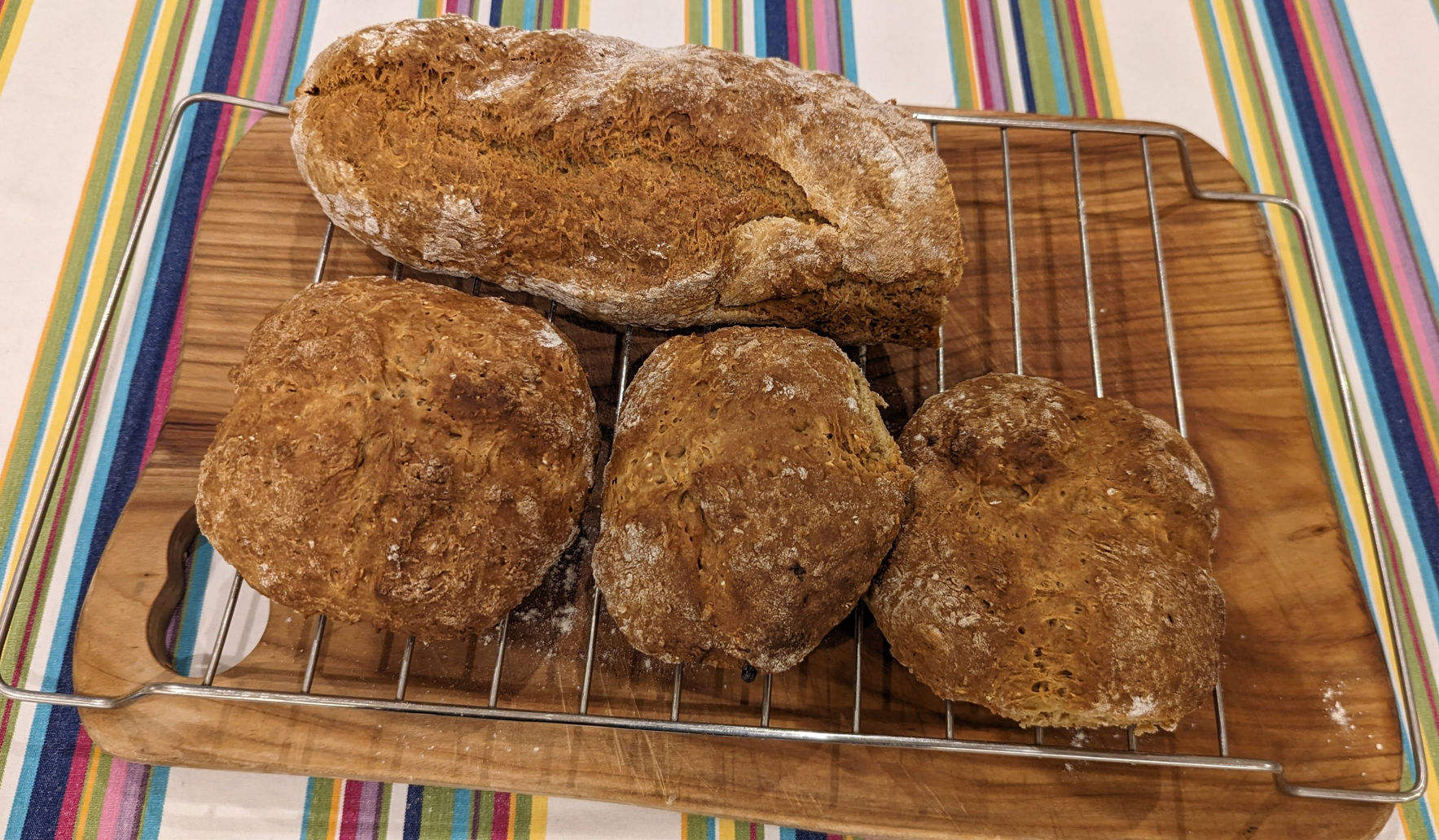
Here’s the technical specification for a tasty loaf of bread. A restaurant near me serves and sells this bread. It’s very quick to make and so tasty!
The Chemistry Stack Overview
Soda bread is fundamentally a chemical leavening system. Unlike yeast-based breads that rely on biological fermentation (slow deployment), soda bread uses an acid-base reaction for immediate lift. The kefir/buttermilk (pH ~4.5) reacts with sodium bicarbonate (NaHCO₃) to produce carbon dioxide gas, which expands in the dough matrix to create the crumb structure—think of it like deploying a containerized workload that instantly scales your dough volume.
Prerequisites:
- An oven at 220C
- Baking tray, roasting tin or loaf tin lined with baking parchment/grease proof paper
- Mixing bowl
- Wooden spoon
- Cooling rack (optional but helps underside of loaf crisp up while cooling)
Dry ingredients:
- 200g plain flour (~3.75dl)
- 60g Porridge oats (chopped if they’re jumbo oats)
- 8g bicarbonate of soda
- 8g salt
- 15g soft brown sugar
Wet ingredients:
- 190g Buttermilk or Kefir (~2dl)
- 25g Black treacle (~1 heaped tablespoon)
Implementation steps:
Step 1: Oven Preheating (220°C)
Why: Preheating is critical for the Maillard reaction window. When dough hits a hot surface, the exterior proteins and sugars begin cross-linking (browning) at 140-165°C. At 220°C, this happens rapidly before the center has time to fully rise, creating the characteristic crust while the interior expands. Failure to preheat = slow rise = dense crumb.
Scientific detail: The dough must reach ~100°C internal temp within the first 10 minutes to set the crumb structure before CO₂ escapes.
Step 2: Line baking tray with parchment
Why: The parchment creates a moisture barrier, allowing the underside to crisp via Maillard reaction rather than steam-softening. Non-stick compounds on parchment (typically silicone) degrade around 250°C, so 220°C is safely within spec.
Tip mechanics: Wetting one side of parchment increases capillary adhesion to the tray—water molecules bridge the parchment and tray surface, preventing slippage during pouring.
Step 3: Mix dry ingredients
Why: Distributing salt and baking soda evenly prevents pockets of un-reacted sodium bicarbonate. Salt also denatures gluten proteins (breaks apart the long protein chains), tenderizing the crumb. The brown sugar’s hygroscopicity (moisture-absorbing property) helps regulate water distribution in the dough.
Lump crushing: Brown sugar’s hygroscopic nature causes clumping. Crushing breaks apart these compacted sucrose crystals, allowing even dispersal and consistent sweetness + Maillard reaction across the loaf.
Step 4: Combine wet + dry ingredients
The critical reaction begins here:
When buttermilk (lactic acid, pH ~4.5) contacts sodium bicarbonate, the reaction is:
HCO₃⁻ + H⁺ → H₂O + CO₂↑
This is a synchronous reaction—CO₂ is released immediately as a gas. At room temperature, you have perhaps 10-15 minutes before most of the acid is consumed and the reaction rate drops to near-zero. This is why you must bake quickly.
Dough texture note: The resulting sticky dough is intentional. High water content (190g liquid : 200g flour = 95% hydration) creates steam alongside CO₂, producing an open, soft crumb. Lower water would yield dense bread.
Temperature sensitivity: If your kitchen is warm (>22°C), the reaction accelerates. If cold (<15°C), it slows—keep ingredients cool if you’re in a hot climate.
Step 5: Pour dough into prepared tin
Thickness uniformity ensures consistent baking. Thin areas may be over-baked (dry) while thick centers remain gummy. Aim for ~3-4cm depth.
Why “pour” not “knead”? Kneading develops gluten networks (desirable in yeast breads for structure and chewiness). Soda bread relies on the minimal gluten already present plus CO₂ bubbles for structure—over-working develops too much gluten, producing a tough, dense crumb instead of the tender, open structure we want.
Step 6: Dust top with flour
Purpose: This creates a flour seal that prevents excessive CO₂ escape during early baking, improving oven-spring (initial rapid rise). The flour also participates in Maillard browning, creating visual appeal.
Secondary benefit: Signals to visual inspection when the loaf is “done”—golden-brown flour coating indicates ~25 min bake time.
Step 7: Make deep cross-cut
Engineering precision here is critical.
As the loaf bakes:
- Interior reaches 100°C → CO₂ expands, pressure increases
- Dough moisture → steam at 100°C, further pressurizing the crumb
- Without a controlled outlet, the dough splits randomly
The pre-made cut provides a stress relief valve. The dough expands along your cut preferentially (lowest resistance path), creating an attractive cross-hatch. The cut also accelerates interior heat penetration—thinner sections bake faster, preventing a gummy center.
Cut depth: ~0.5cm deep; too shallow won’t guide expansion, too deep may inhibit rise.
Step 8: Bake for 25 minutes at 220°C
Temperature/time relationship:
- 0-5 min: CO₂ expands + steam generation; dough is still expanding (oven spring)
- 5-15 min: Maillard reaction dominates; exterior proteins cross-link, crust sets; interior reaches ~90°C
- 15-25 min: Carryover cooking; interior reaches target ~98°C (just before the crumb sets too firm)
How to verify doneness:
- Tap bottom of loaf—should sound hollow (indicates moisture has evaporated from exterior)
- Internal temp ~98°C (use instant-read thermometer)
- If it’s still dense/gummy when cut, it under-baked; if hard throughout, it over-baked
25 minutes is optimal for a ~400g loaf at 220°C. Scale time proportionally: A smaller loaf might need 20 min; a larger one 28-30 min. Use temp as ground truth, not time.
Step 9: Cool on rack
Why a rack (not a plate): The underside continues baking via radiant heat from below. On a plate, trapped steam softens the bottom crust; a rack allows air circulation underneath, crisp-ing it via dry heat.
Cooling duration: 15-20 minutes minimum. The interior is still set-ting via starch gelatinization. Cutting too early releases steam, collapsing the crumb structure. The Maillard-browned crust is brittle when hot; cooling allows the crumb to firm up and moisture to redistribute, making slicing easier.
Residual carryover: Interior temp continues climbing ~2-3°C for the first 5 minutes off the oven due to thermal lag—another reason to wait before cutting.
Serve with butter or a sharp cheese such as cheddar.
Ingredient Specifications (Chemistry Rationale)
Plain flour (200g): Provides starch (for structure + Maillard browning) and minimal protein (~10-12%). Lower protein than bread flour—you want gluten development to stay low.
Porridge oats (60g): Beta-glucans (soluble fiber) absorb water, tenderizing the crumb. They also add nuttiness via Maillard. The oats are your secondary leavening agent—they trap bubbles better than flour alone.
Sodium bicarbonate (8g): Your acid catalyst. The stoichiometric ratio to lactic acid in buttermilk is roughly 1:1.5 by weight, but 8g is slightly less than needed for complete conversion. This is intentional—excess bicarbonate tastes metallic. Any unreacted buttermilk just adds tang (desirable).
Salt (8g): ~2% by weight of flour. Suppresses gluten development, tenderizes. Also enhances flavor perception—a bit of salt makes the bread taste sweeter.
Brown sugar (15g): Provides sucrose for Maillard (browning), plus molasses (hygroscopic, keeps crumb moist longer). Light vs. dark brown makes minimal difference; use what you have.
Buttermilk/Kefir (190g): The acid source (pH 4.5). Kefir adds probiotics and slight tang. Buttermilk is traditional. Never use milk—no acid means no rise. The 190g creates 95% hydration; essential for a tender crumb.
Black treacle (25g): Adds moisture + deep Maillard flavors. Iron oxide in treacle also makes browning darker. Optional but recommended.
Troubleshooting Matrix
| Problem | Likely Cause | Fix |
|---|---|---|
| Dense, gummy center | Under-baked (interior didn’t reach 98°C) | Increase bake time 2-3 min; lower oven rack closer to heat source |
| Collapsed loaf post-bake | Over-fermented (all acid consumed before crust set) | Mix and bake faster; chill ingredients before use |
| Pale, soft crust | Insufficient Maillard (temp or time too low) | Increase oven temp to 230°C; bake 27-30 min |
| Metallic taste | Excess unreacted baking soda | Reduce NaHCO₃ to 7g next time; ensure buttermilk is fresh (acidity degrades) |
| Split randomly instead of at cut | Cut too shallow or dough over-fermented | Deepen cut to 0.75cm; reduce wait time before baking |
| Dry, crumbly crumb | Over-baked or hydration too low | Reduce bake time 2 min; increase buttermilk to 200g next batch |
Evidence
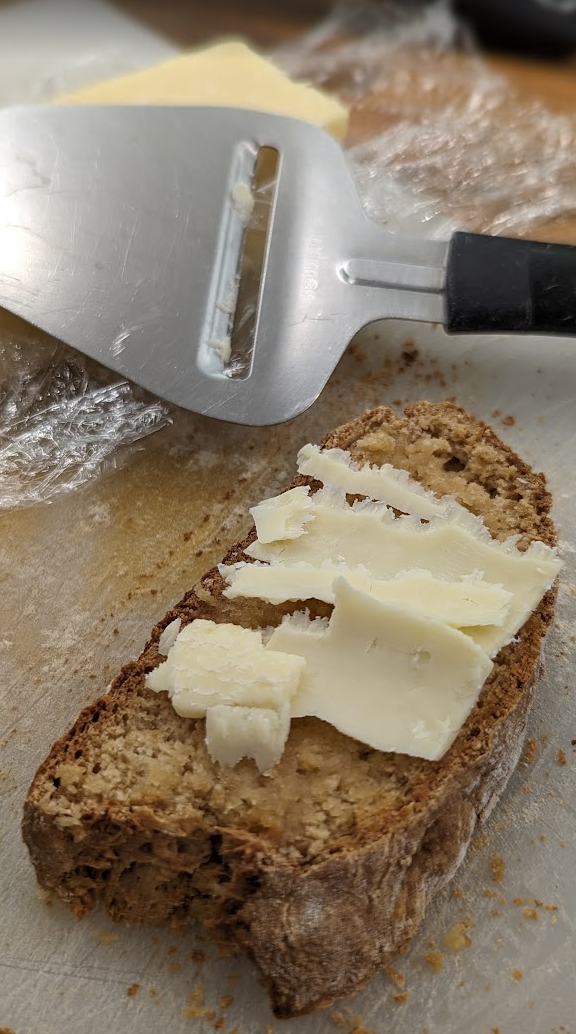
References:
- Video from Parlour restaurant in Kensal Rise. Parlour soda bread